VisionForgeX Insights
Programmatic advertising, explained by the people who run it
How ad revenue really works: Google AdX and MCM, header bidding, floors, viewability and policy, written from the auctions we run every day for publishers.

What Is Google MCM? How It Works and How to Choose a Partner
Google MCM explained: how Multiple Customer Management gets publishers into Google AdX, Manage Inventory vs Manage Account, payments and choosing a partner.
Latest
 Publisher growth
Revenue per visit: which traffic sources really pay for themselves
Page RPM tells you what a page earns; revenue per visit tells you what a visitor from Facebook, search or a paid campaign earns across every page they read. How to measure it without inventing revenue, the counting mistake we made, and a script.
 Programmatic basics
PPID in Google Ad Manager: a first-party ID done carefully
The publisher provided identifier lets you send Google your own ID for a reader, so frequency caps and audiences work without third-party cookies. What Google requires, who sees it, the consent rules we follow, and code that sets it only when it should.
 Ad formats and placements
Web interstitial ads: triggers, frequency caps and #google_vignette
A web interstitial is the full-screen ad Google shows when a reader moves between pages or comes back to a tab. Which triggers exist, how the frequency cap works, code that sets them, and why the address of your page suddenly ends in #google_vignette.
 Ad formats and placements
Rewarded ads for web: how they work, the rules, and the code
A rewarded ad on a website is one the reader chooses to watch in exchange for something you give them. What Google requires, what you have to build yourself, working Google Publisher Tag code, and the counting mistake we made.
 Yield and revenue optimization
How to test floor prices and read the result honestly
A floor change always seems to work if you read eCPM, and always seems to fail if you read fill. How to test floor prices properly, what Google's own experiments give you, how long to wait, and a small script that says when a result is real.
 Yield and revenue optimization
Floor prices by country and device: two ways that fit in Ad Manager
One floor for the whole world is too high in some countries and too low in others. Two ways to set floors by country and device in Google Ad Manager, how we fit them under the 200-rule limit, and a mistake we made with page-wide targeting.
Programmatic basics
What programmatic advertising is, who is in an auction and how a page becomes revenue, explained from the inside.
Google AdX and MCM
Google Ad Manager, Ad Exchange and Multiple Customer Management: access, approval, policies and getting paid.
 Google AdX and MCM
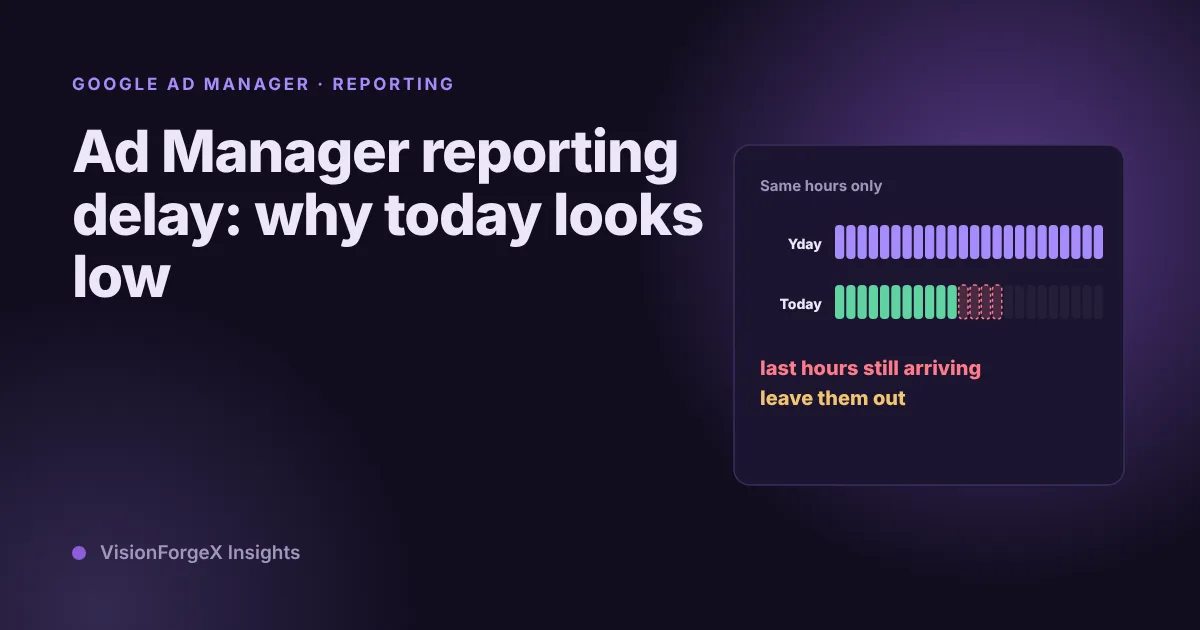
Ad Manager reporting delay: why today's numbers look low
Today's Ad Manager numbers are always partial, and yesterday's can still move. What Google says about how fresh the data is, the time zone trap, and a small script that compares today with the same hours of yesterday.
 Google AdX and MCM
Google Ad Manager key values: set up, send and report on them
Key-values tell Ad Manager what a page is about, so a line item can target it and a report can split by it. How to create the key, send values from the page, stay inside Google's limits, and avoid the trap of values nobody can report on.
 Google AdX and MCM
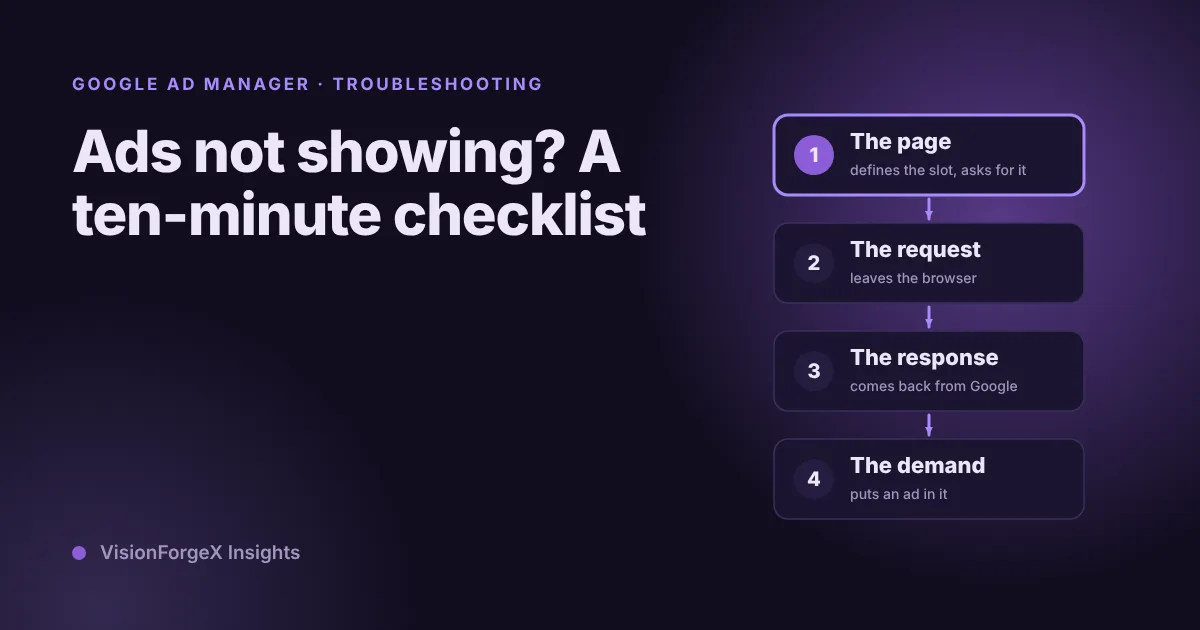
Google Ad Manager ads not showing: a ten-minute checklist
When ads do not show, the cause sits in one of four places: the page, the request, the response or the demand. Three console snippets tell you which, and a checklist covers the common causes in each.
Header bidding and Prebid
Prebid.js, OpenRTB, bidders, timeouts and floors: how more buyers compete for every impression.

Yield and revenue optimization
RPM, eCPM, viewability, refresh and floors: the levers that raise revenue per visitor, with numbers.
Yield and revenue optimizationHow to test floor prices and read the result honestly
A floor change always seems to work if you read eCPM, and always seems to fail if you read fill. How to test floor prices properly, what Google's own experiments give you, how long to wait, and a small script that says when a result is real.
Yield and revenue optimizationFloor prices by country and device: two ways that fit in Ad Manager
One floor for the whole world is too high in some countries and too low in others. Two ways to set floors by country and device in Google Ad Manager, how we fit them under the 200-rule limit, and a mistake we made with page-wide targeting.
 Yield and revenue optimization
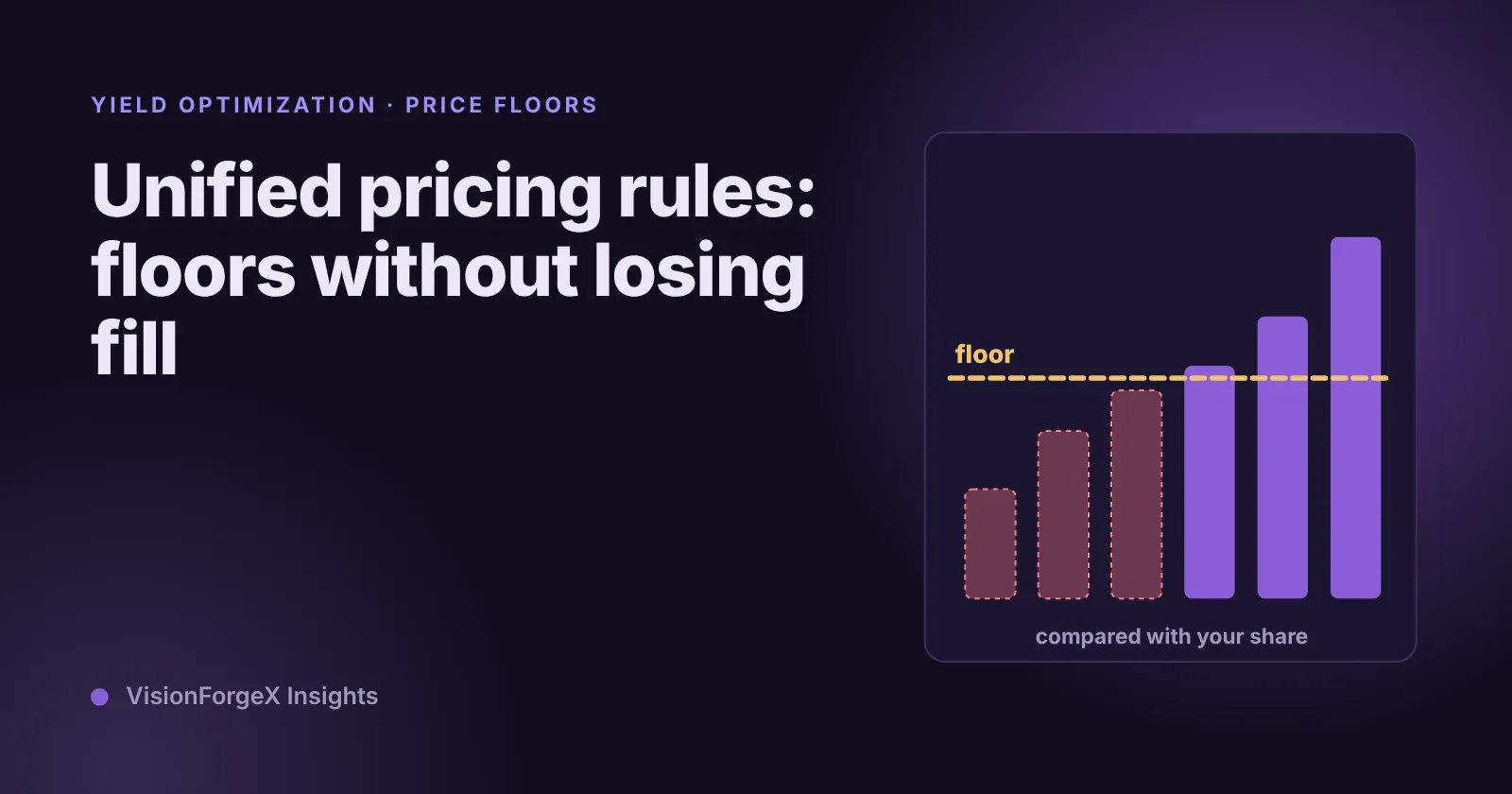
Unified pricing rules: how to set floors without losing fill
Pricing rules decide the lowest price an ad may sell for in your Ad Manager network. How Google applies them, why the floor is compared with your share and not the buyer's bid, which rule wins when two overlap, and the first floor we would set.
Ad formats and placements
Display, anchors, side rails, interstitials, rewarded and video: where each earns, and what it costs the reader.
Ad formats and placementsWeb interstitial ads: triggers, frequency caps and #google_vignette
A web interstitial is the full-screen ad Google shows when a reader moves between pages or comes back to a tab. Which triggers exist, how the frequency cap works, code that sets them, and why the address of your page suddenly ends in #google_vignette.
Ad formats and placementsRewarded ads for web: how they work, the rules, and the code
A rewarded ad on a website is one the reader chooses to watch in exchange for something you give them. What Google requires, what you have to build yourself, working Google Publisher Tag code, and the counting mistake we made.
 Ad formats and placements
Ads inside cards, tables and headings: why it happens, how to stop it
Automatic ad placement loves a gap between two elements, and a card layout is full of gaps. Here is how we found ads inside cards on a real site, and the rules that keep them out.
Policy, compliance and invalid traffic
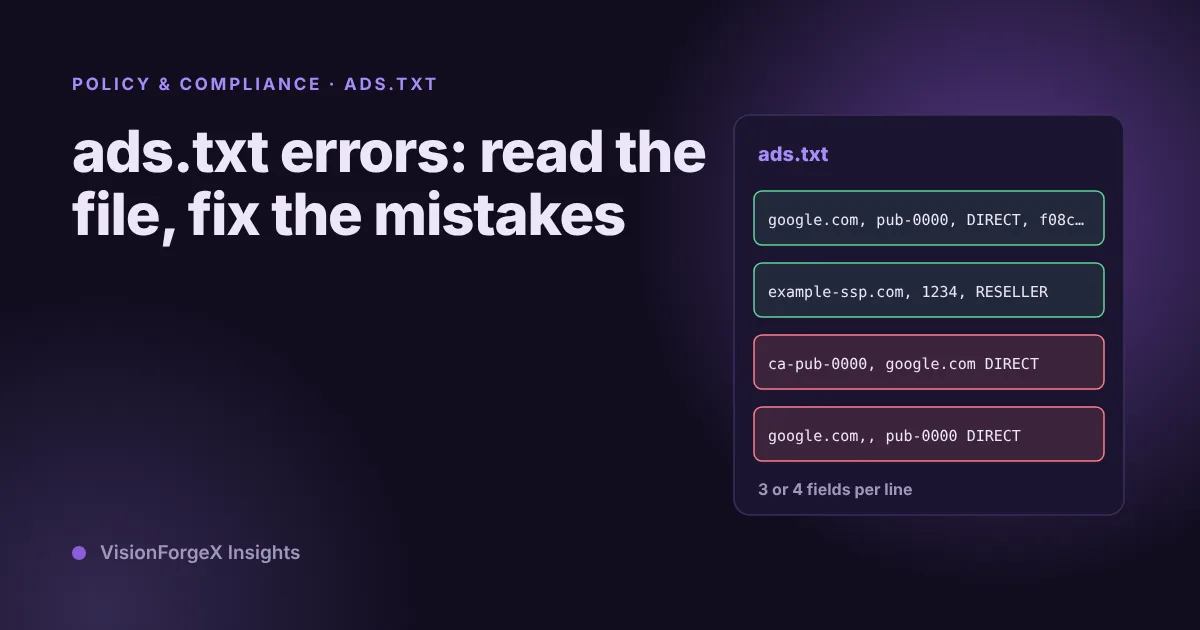
Google policies, ads.txt, sellers.json, consent and invalid traffic: keeping an account healthy and paid.
Monetization platforms
How to choose a monetization partner or MCM platform, what to ask, and how the options compare.

Publisher growth
Traffic, Core Web Vitals, content and audience: building a site that advertisers pay more for.
Publisher growthRevenue per visit: which traffic sources really pay for themselves
Page RPM tells you what a page earns; revenue per visit tells you what a visitor from Facebook, search or a paid campaign earns across every page they read. How to measure it without inventing revenue, the counting mistake we made, and a script.
 Publisher growth
Layout shift from ads: how to measure it and read the number
Your page's layout shift score mixes everything that moved. This guide separates what the ads caused, shows a script that does it in your browser, and says what the number means.
Nothing matches that yet. Ask us: the questions publishers send become articles.